Designing Offices for Diverse Minds

Diversity in the workplace is about more than hiring practices; it’s about making sure that every person, whether they’ve been with the company for weeks or decades, feels supported and able to perform at their best. Neurodiversity is not a trend; it's a strategic approach to creating environments where every individual, regardless of their neurological profile, can thrive.

Neurodiversity, a term encompassing conditions such as autism, ADHD, dyslexia, and dyspraxia, represents the natural variation in the human brain. While these differences can bring immense strengths – creativity, innovative problem-solving, and unique perspectives – they can also make traditional office environments challenging. For many neurodivergent individuals, open-plan offices, flickering lights, and constant background noise can be overwhelming, leading to sensory overload, reduced concentration, and increased stress.

A calmer Workspace that works for everyone

The Business Case for Neuroinclusion: Key Statistics

To understand the importance of neuroinclusive design, it's helpful to look at the numbers. Research paints a clear picture of the opportunities and challenges facing neurodivergent people in the workplace.

  • Prevalence: It is estimated that 1 in 7 people in the UK are neurodivergent, accounting for around 15% of the population. This means most organisations already have neurodivergent employees, whether they are aware of it or not.
  • Employment Gap: A significant disparity exists in employment rates. In 2021, just 29% of autistic adults were in some form of paid employment, and only 1 in 16 were in full-time employment. This highlights a huge pool of untapped talent.
  • Productivity and Innovation: Creating an inclusive environment is not just a social good; it's a smart business decision. Studies have shown that neurodivergent teams can be 30% more productive than neurotypical teams, and companies with inclusive cultures report higher revenue and profit margins.
  • Retention: When adjustments are made and tailored to individual needs, employees are significantly less likely to leave. One report found that when support was highly tailored, employees were far more likely to stay with their current employer.
A quiet breakout space with acoustic furniture, privacy desks and long tables to spread out.

By designing for neurodiversity, we're not just accommodating a minority; we are creating a better work environment for everyone. A quiet nook or office booth for focused work, for example, benefits not only an autistic employee but also anyone needing to concentrate deeply on a complex task.

Why Workspace Design Matters for Neurodivergents

Neuroinclusive office showing different work areas
Neuroinclusive work area with acoustic height-adjustable desks
A quiet lounge positioned outside of the boardroom for waiting post meeting discussions.

Neurodivergent individuals often experience the workplace differently from their neurotypical peers. This isn't a matter of preference; it's a difference in how the brain processes information. Factors impacting the five main senses, plus the sense of movement and spatial awareness, can have a significant impact on an individual’s comfort, focus, and productivity.

Neuroinclusive office layout with work areas noted

Key Sensory & Cognitive Differences and Solutions

  • Visual Environment (Sight): Harsh, fluorescent, or flickering lights, alongside visual clutter (busy patterns or complex colour schemes), can overwhelm the brain.
    Solution Focus: Use adjustable lighting (dimmers, task lamps), minimise patterns, and stick to calming, muted colours for focused areas.
  • Auditory Environment (Sound): Loud background noise, sudden noises, or constant low-level hums (like air conditioning) are difficult to filter out, leading to stress and fatigue.
    Solution Focus: Implement Acoustic pods and panels, designate quiet zones, and provide high-quality noise-cancelling headphones.
  • Olfactory Environment (Smell): Strong or constant odours (perfumes, cleaning products, food smells) can be highly distracting or cause physical discomfort, as the sense of smell is sometimes far more acute.
    Solution Focus: Use low-odour or unscented cleaning products, enforce a low-fragrance policy, and ensure excellent ventilation.
  • Tactile (Touch & Texture): The physical sensation of textures, materials, and finishes can be highly impactful for neurodiverse individuals. A dislike of certain surface textures—such as those that feel rough, sticky, cold, or abrasive—can cause significant distraction and discomfort. Similarly, the feel of upholstery on a chair can be irritating.
    Solution Focus - Work Surfaces: Offer choice in desktop finishes. Consider Nano laminate, which provides a smooth, non-reflective, and often warm-to-the-touch surface with anti-fingerprint properties. Alternatively, incorporate the natural, slightly warmer texture of linoleum or the familiar, authentic grain of veneer and 'Like Wood' surfaces to provide distinct, pleasing tactile options that can reduce sensory overload or provide comfortable grounding.
    Solution Focus - Seating: For users sensitive to the texture or heat retention of traditional fabric upholstery, consider mesh-backed and mesh-seated chairs. The woven structure of mesh chairs minimises contact points and allows for excellent airflow (breathability), which can greatly enhance comfort for those who experience temperature dysregulation or sensory aversion to fabric.
  • Spatial & Focus Needs (Layout & Window Position): Open-plan offices lack necessary boundaries and privacy, while poor wayfinding (confusing layouts) increases anxiety.
    Solution Focus: Create a variety of distinct, clearly defined zones; position desks near walls or screens; and allow control over window positions/views to manage sensory input.
  • Kinaesthetic (Movement & Posture): The need to fidget or frequently change position can be overwhelming when confined to a static posture. Physical discomfort from a poorly fitting chair exacerbates this, significantly impeding focus and increasing anxiety.
    Solution Focus - Height-Adjustable Desks: Implementing height-adjustable desks (sit-stand desks) allows users to seamlessly switch between sitting and standing. This enables frequent postural changes, which is crucial for comfort and managing the need for movement throughout the workday.
    Solution Focus - Ergonomic Seating: Provide ergonomic office and task chairs that offer high levels of adjustability (e.g., lumbar depth, armrest height, back tilt). This ensures the chair can be precisely tailored to provide optimal support and physical comfort for the individual user.
    Solution Focus - Active Seating Options: Offer active seating solutions, such as balance ball chairs or chairs with built-in all-day active movement mechanisms. These options facilitate subtle, continuous shifting and micro-movements, which can help regulate energy and concentration levels.
Quiet privacy desk booths spaces for touchdown and focusing
Enclosed office for 4-users who need calmer spaces and includes coffee machines to reduce leaving the office
Soft contemporary colours and finishes help reduce distractions
Balance ball and height-adjustable desks offer increase desk activity and movement.

Furniture Suggestions for a Neuroinclusive Workspace

Acoustic Management

Noise is a primary source of distraction and stress, reduce noise and create calmer soundscapes.

  • The Problem: The constant hum of air conditioning, colleagues' conversations, and phone calls can be a distraction to anyone, but its a sensory assault for some neurodivergent individuals.
  • The Solution: Implement a range of acoustic strategies. This includes using sound-absorbing materials on walls and floors, installing acoustic panels, and creating dedicated quiet and closed spaces.
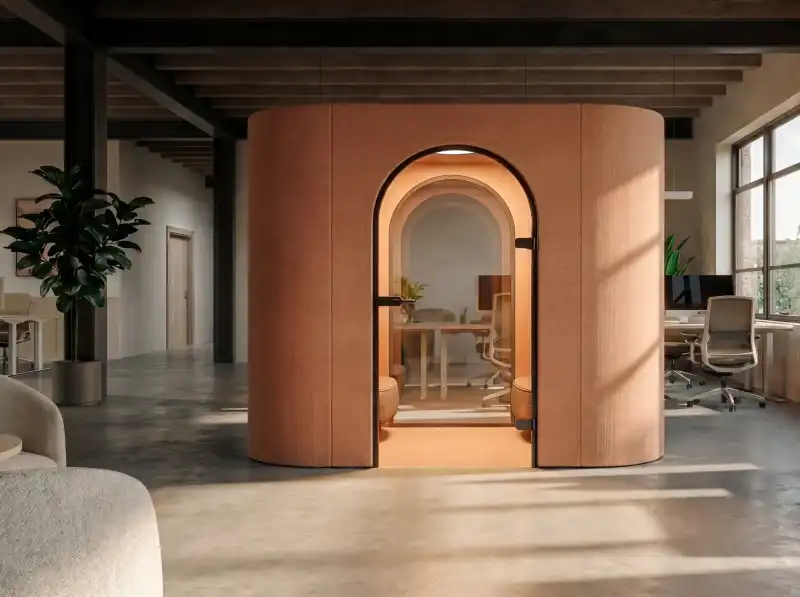
  • Our Product Focus: Here, we can introduce our acoustic office pods and booths. These offer a private, soundproof sanctuary for deep work or a break from sensory overload. Our acoustic wall panels, suspended canopies and office screens can be used to dampen noise throughout the office, creating a more natural soundscape.
Single Person Office Pod for high levels of privacy.

Acoustic Pods

Individual work pods and phone booths offer the ultimate sound privacy

Tessallate acoustic wall panels reduce travelling sounds

Acoustic Panels

Reduce reverberation and create a softer and more natural sound environment

Digs single seat privacy booth for focus work and calls

Privacy booths

Provide quiet spaces with single seat privacy booths and team sofas

Visual Environment

Lighting, colour, and visual clutter all have a profound impact on focus and well-being.

  • The Problem: Harsh fluorescent lighting can be visually jarring, and cluttered spaces can be distracting. Some neurodivergent individuals are highly sensitive to flickering lights or specific colour palettes.
  • The Solution: Prioritise natural light wherever possible—offer adjustable LED lighting options, such as desk lamps with dimmer switches, suspended acoustic lighting over tables and desks. Use calming, muted colour schemes in primary workspaces and reserve brighter colours for collaborative or break.
  • Our Product Focus: Our acoustic lighting can be highlighted here. These offer both acoustic support and direct lighting above work and collaborative environments. We can also showcase our modular office storage units, which help maintain a tidy and organised workspace, reducing visual clutter.

Biophilic Environment

Integrating natural elements into the workspace is proven to reduce stress, improve mood, and enhance cognitive function for all employees.

  • The Problem: Sterile, artificial environments with a lack of natural light or greenery can contribute to feelings of disconnection and fatigue, particularly for those sensitive to highly artificial stimuli.
  • The Solution: Incorporate natural light, plants, natural materials (wood, stone), and views of nature where possible. Even indirect natural elements, like images of nature or subtle organic patterns, can have a positive impact.
  • Our Product Focus: Beyond direct plant integration, our furniture can actively support biophilic principles. Our modular storage units, mobile planter walls and collaborative A-frame tables are available with integrated planter boxes, bringing living greenery directly into work zones and creating natural visual dividers. We also offer a range of finishes in natural wood veneers and muted, earthy tones that mimic the calming colours and textures of the natural world, fostering a more serene and restorative environment.
se:matrix office shelving helps divide spaces

Modular Storage

Create zonal divides, hide clutter and introduce blocks of colour.

Spatial Layout and Zoned Working

The 'one-size-fits-all' open-plan office is a relic of the past.

  • The Problem: For many, the lack of control over their workspace and the constant, unpredictable movement of people can be unsettling.
  • The Solution: Create a variety of distinct zones to cater to different working styles and tasks. This could include:
    • Focused Work Zones: Quiet areas with individual workstations.
    • Collaborative Zones: Open spaces for group work and brainstorming.
    • Breakout & Rest Zones: Comfortable, non-work areas for rejuvenation.
    • Sensory-Friendly Zones: A small, low-stimulus room or booth for those needing a complete break.
  • Our Product Focus: This is a perfect opportunity to present a range of products. Our acoustic work booths can be shown for the focused zones, while our acoustic sofas and privacy seating, offer a quiet space away from the busy workspace. For breakout spaces, we can showcase our comfortable lounge chairs and soft seating options, noting how a variety of upholstery materials can introduce subtle texture changes that cater to sensory preferences.
se:hive acoustic booth

Work Booths

Offer focus work booths to send collegues a message of do not disturb.

Pullman single-user privacy chair

Privacy Seating

Single seat or dual-user sofas with work tables offer a quick private workspace.

Ergonomics and Sensory Comfort

Providing adaptable, comfortable furniture is key to physical and sensory well-being.

  • The Problem: Standard furniture can be uncomfortable and unsupportive, leading to physical discomfort. For some, the texture of a chair or the feel of a desk surface can be distracting.
  • The Solution: Offer a range of ergonomic furniture that is highly adjustable. Provide options for different seating types, from traditional office chairs to standing desks and active seating that moves with the user's body, offering support throughout the day.
  • Our Product Focus: This is where we can showcase our core office product range, with our ergonomic task seating and office chairs available in a variety of comfortable fabrics and breathable mesh upholstery. Our Height-adjustable sit-stand desks, are another key product, allowing users to switch positions, manage their energy levels, and stimulate alternating postures. We can also mention the availability of our products to cater to sensory preferences, including different finishes and textures, such as linoleum, veneer, or a textured melamine-faced “likewood”.
HAG SoFi with active seating

Active Chairs

Active office and task seating including balance mechanisms.

Height-adjustable desks with acoustic screens

Adjustable Desks

Individual and benched adjustable-height desks with acoustic dividers.

se:Air full mesh seating

Mesh chairs

Mesh task and office seating such as the se:Air full mesh chair.

Clear Wayfinding and Layout

Create predictable zones, layouts, and landmarks that are straightforward and predictable, avoiding unnecessary clutter, obstacles, or confusion.

  • The Problem: Stagnant open-plan offices where everything looks the same or cluttered workspaces can visually increase anxiety and stress, causing distraction and reduced focus.
  • The Solution: Create a zoned office space with a defined purpose that feels open and easy to move through. Furniture can be part of the navigation system as well as the design flow within any workplace. Zonal reference, such as differentiating different areas by colour, feature-furniture, and landmark pieces, helps orient employees.
  • Our Product Focus: Colour can be defined easily with office furniture and seating through the use of upholstery and surface options. Tables, desks, and storage, for example, can be coordinated with colourful boards and framework options. For zoning of different spaces, modular storage such as lockers or tall modern cube storage can be incorporated into the design, clearing clutter and making use of possible dead space. Landmark furniture like high-backed sofas, large communal tables, or statement chairs can serve as orientation points (“Meet me by the red sofa by the shelving”).
se:living sofa island

Island Seating

Create welcoming large island seating as a meeting point before a meeting.

Combus zonal storage creating a meeting area

Zonal Storage

Create corridors, neighbourhoods and meeting spaces with zonal storage.

Locker wall complete with seating nook

Locker Spaces

Locker spaces are an ideal area to create social collisions and help wayfinding.

Create a space for everyone

These design choices don’t just support neurodivergent colleagues—they create a calmer, more efficient environment for everyone, while allowing the workplace to express its own unique identity.

A good workspace layout with easy wayfinding

Designing a workspace can feel complex, but you don't have to navigate it alone. We offer more than just a portfolio of products; we provide a complete, tailored solution. Not only do we supply the full range of ergonomic and acoustic furniture needed to create diverse zones, but our in-house design team can translate these principles into reality for your unique space. We'll work with you to develop detailed floor plans and 3D renders, ensuring that every choice—from the placement of a private acoustic pod to the texture of a chair—actively supports your employees' wellbeing and productivity. Get in touch today to start designing your next-generation workplace.

Contact Us to Discuss Your Workspace