Acoustic & Environmentally Friendly Office Screens
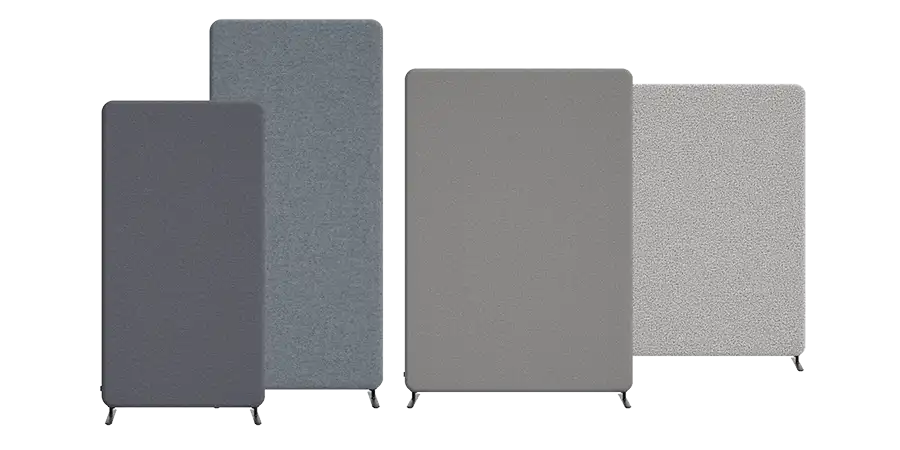
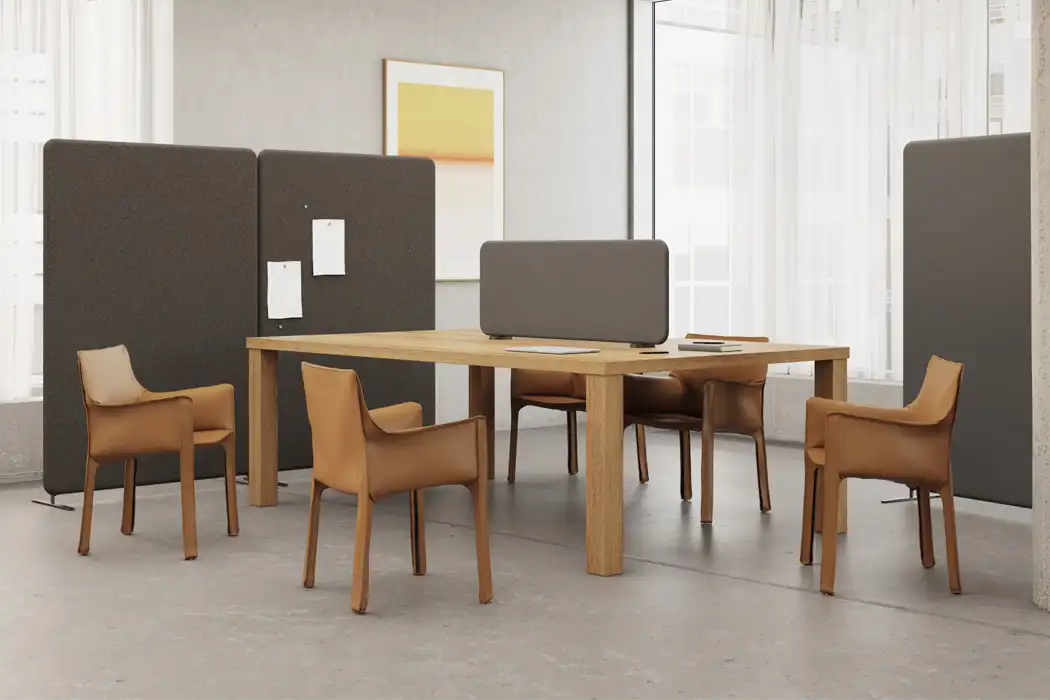
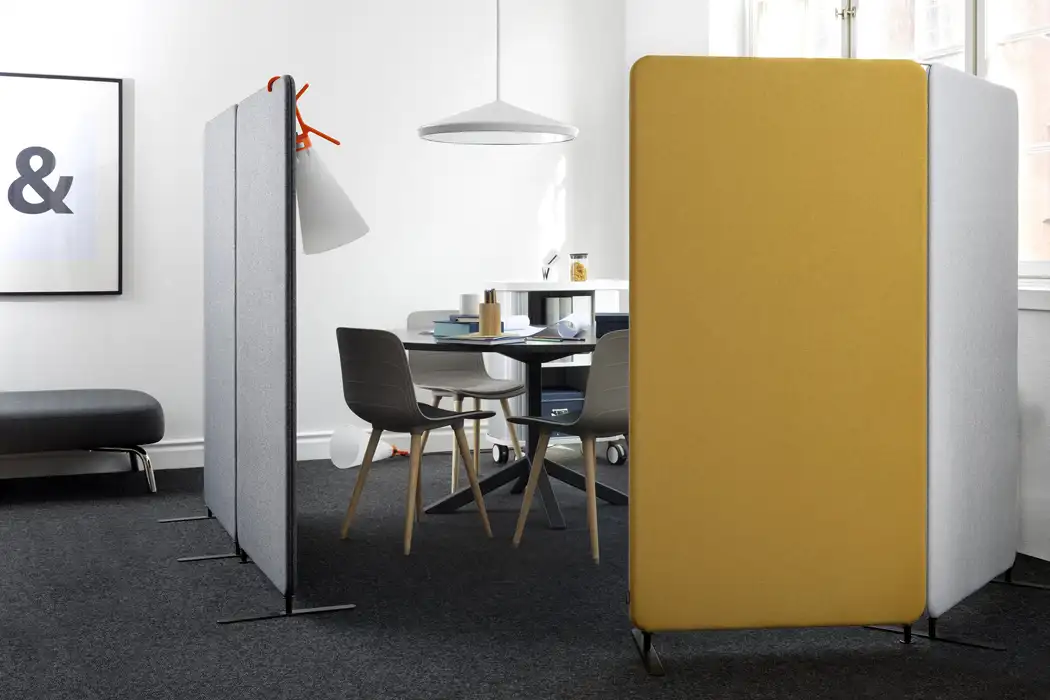
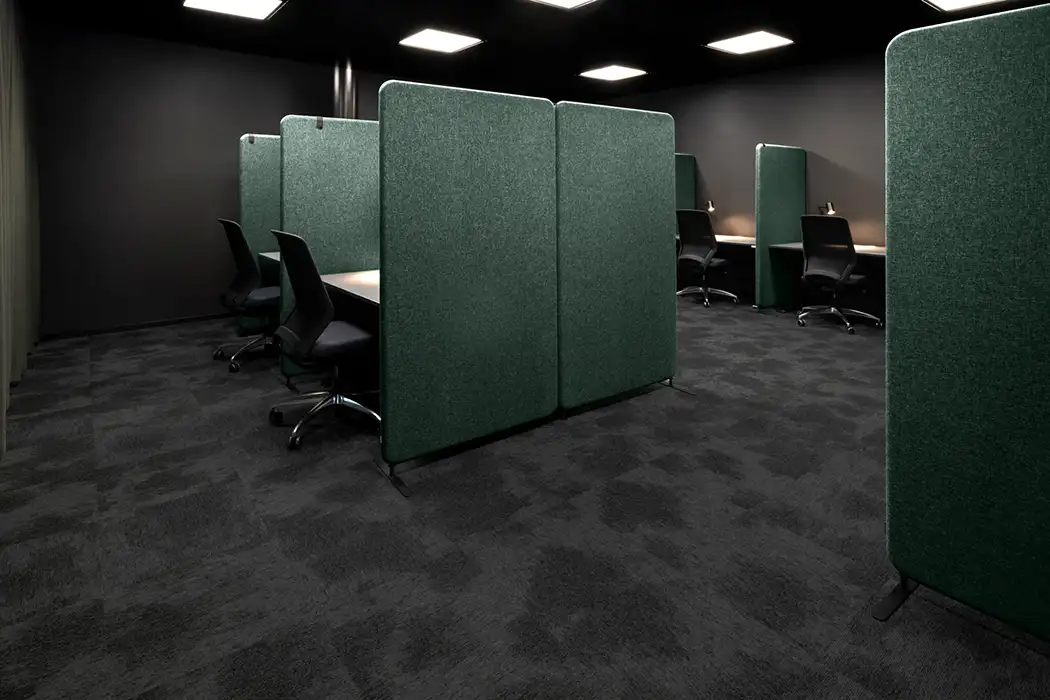
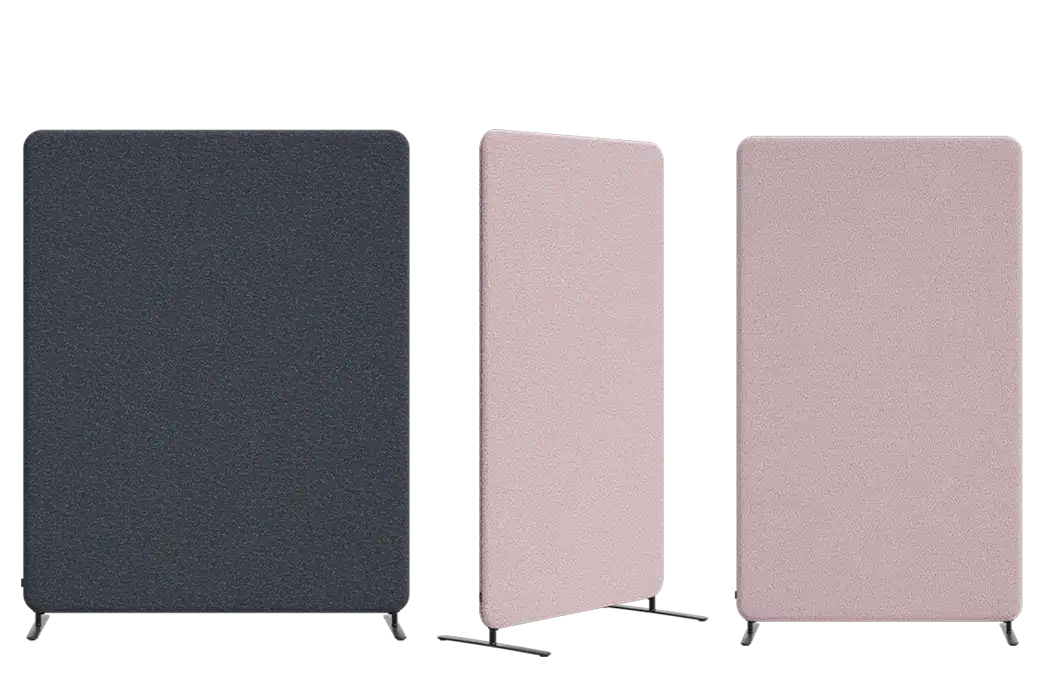
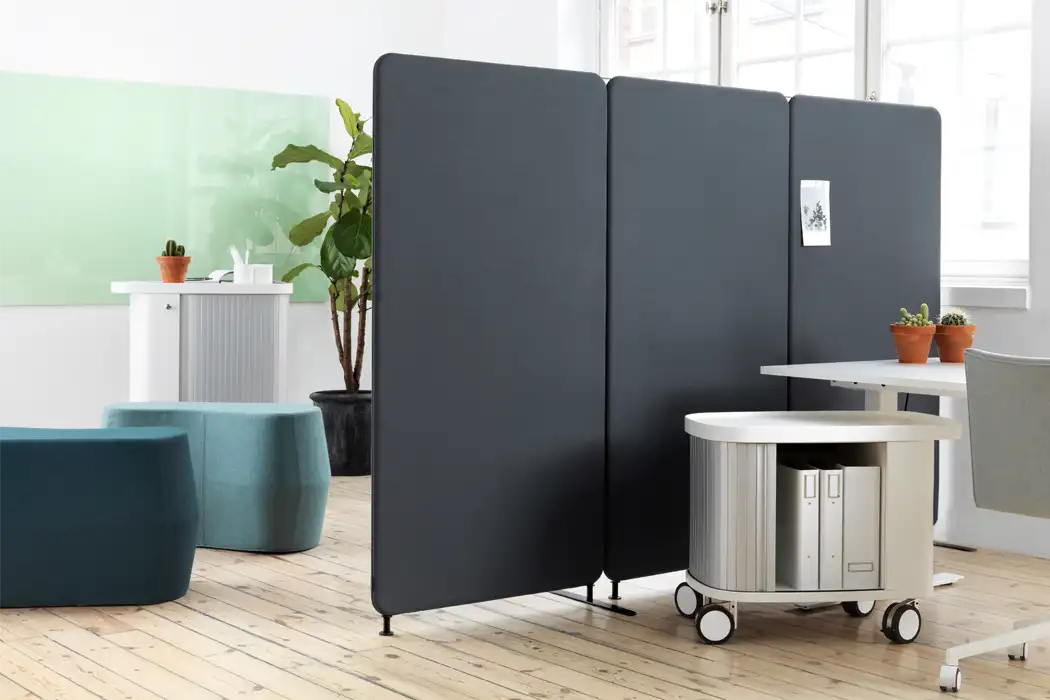
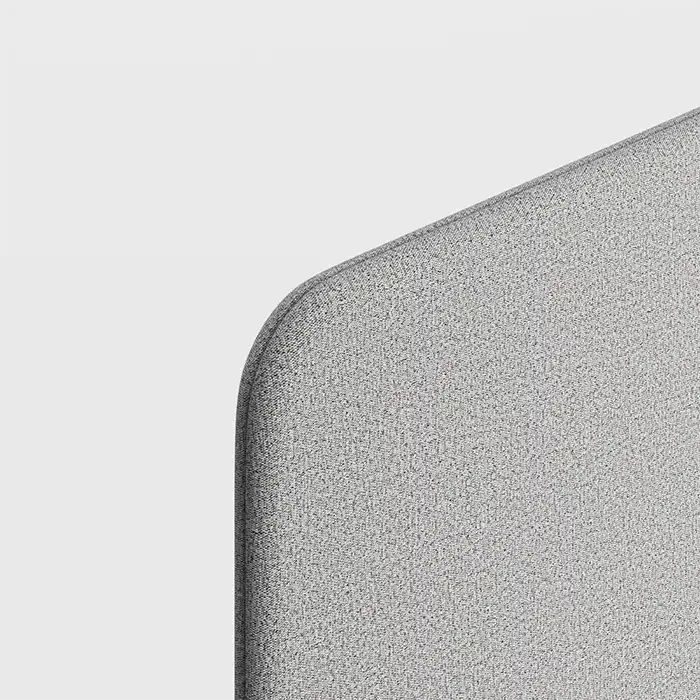
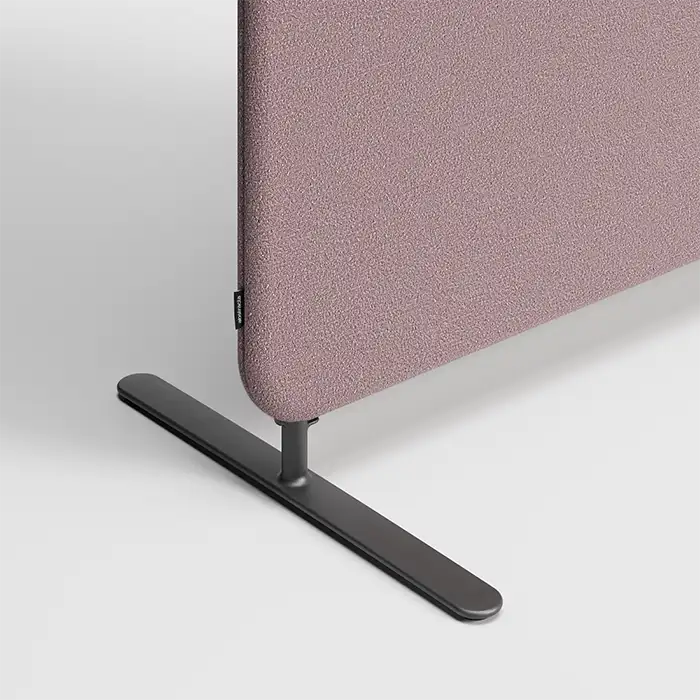
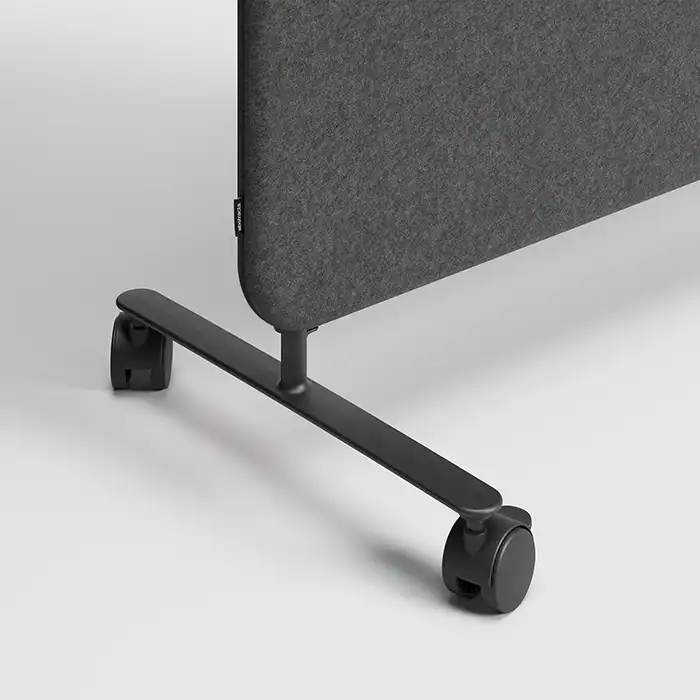
Softline Floor is a contemporary acoustic divider, upholstered in fabric with linkable feet and castors. Various configurations can be created using additional connector brackets.
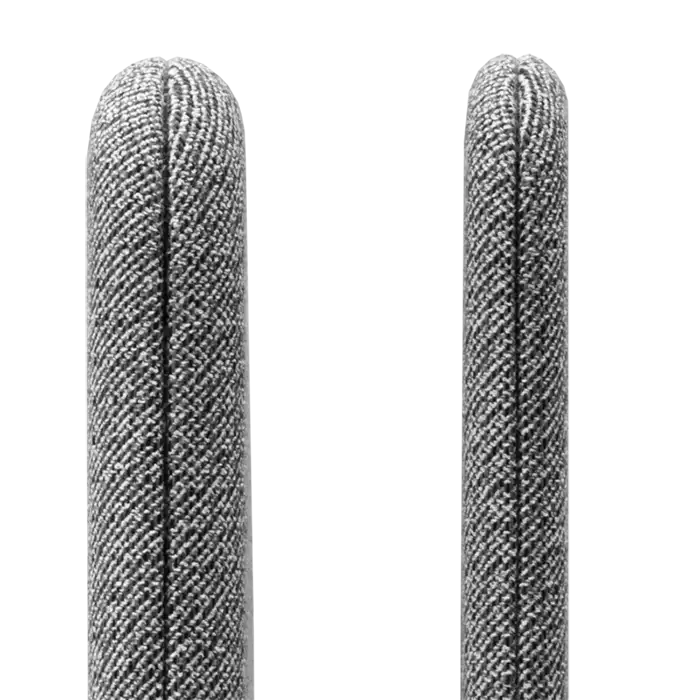
Softline screens are available in two different thicknesses: 30mm and 50mm.
- 30mm Screen: The sound-absorbing filling is partly made from textile waste and polyester reclaimed from recycled PET bottles to lower the environmental impact.
- 50mm Screen: The extra thick sound-absorbing filling is made from stone wool, which can be recycled repeatedly without any loss in performance or quality.
The acoustic rating differs by thickness, with the 50mm thick dividers offering increased absorption.
Below are two test results from Acoustic Facts for the 30mm and 50mm floor screen sizes: W1000 x H1500mm
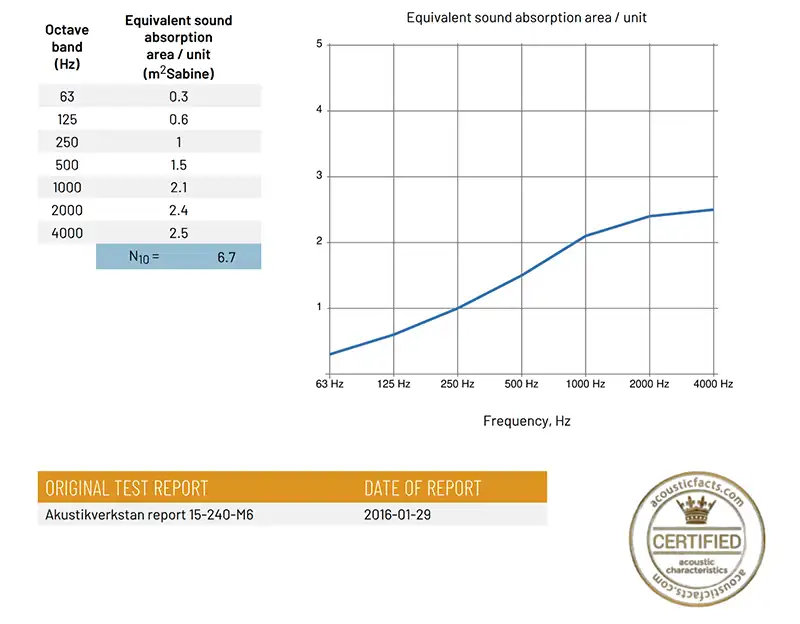
Softline 30 Floor Screen
Screen test size: W1000 x D30 x H1500mm
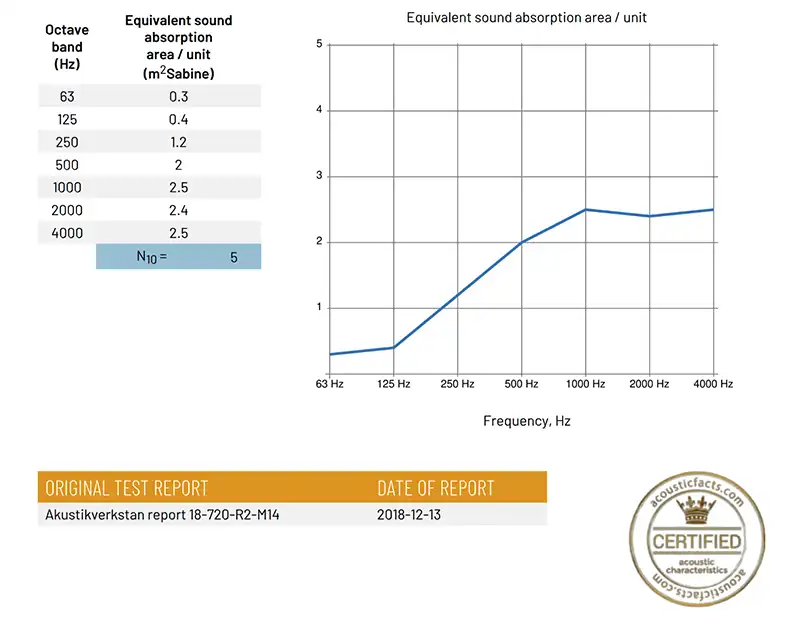
Softline 50 Floor Screen
Screen test size: W1000 x D50 x H1500mm
The 75m² Room Example
A good rule of thumb for open-plan offices is to aim for a sound absorption area equivalent to roughly 10% of the room's floor size. In a 75m² room, this means aiming for 7.5 square metres of total absorption to help manage background noise and echo.
Using the Softline 50 Floor Screen (W1000 x H1500mm), which carries an independently tested N10 rating of 5.0, we can set our acoustic baseline. Because the "10" in the N10 metric represents 10m² of absorption, a screen with a rating of 5.0 provides 2m² of absorption (10 ÷ 5.0 = 2). Therefore, you would need roughly 4 screens to meet this 7.5m² target.
Think of this calculation as your acoustic starting point. As floor screens are primarily used to zone and divide space, they work best when used as part of a wider strategy. If your office layout accommodates a high volume of staff or is designed as an agile workspace with high movement, please treat this figure as your absolute minimum. In high-density or multi-purpose spaces, we advise pairing these screens with additional acoustic furniture, wall panels, or ceiling baffles to effectively break up sound travel and keep the workspace comfortable as your team grows.
Important Information Regarding Acoustic Estimations: The acoustic guidelines provided on this website are for a starter estimation purposes only and do not take existing building or furniture properties into account. We base our targets on the N10 metric, aiming for a sound absorption area equivalent to 10% of the room’s floor space. Unlike NRC percentages (often cited at 15-25% for flat 2D wall/ceiling panels, carpets and textured walls), N10 is specifically engineered for 3D furniture. Because screens and 3D panels act as efficient vertical barriers, targeting 10% of your floor area provides effective acoustic zoning with significantly less product. Feel free to add more as you please.
Please note that these figures represent a suggested acoustic baseline. Actual performance is influenced by:
- Room Architecture: Ceiling height, hard reflective surfaces (e.g., concrete/glass), and floor coverings.
- Office Density & Usage: Number of personnel, activity levels, and layout (agile vs. static).
- Existing Treatments: Other existing acoustic elements like ceiling baffles or soft furnishings.
For projects where acoustic privacy is critical, or for spaces with unusual dimensions and materials, we recommend consulting an acoustic engineer. Urban Office provides these calculations as a starting point to assist with your planning and product selection, and they do not constitute a professional acoustic performance guarantee.